Showing posts with label setsuko torii. Show all posts

June 3, 2008

Kit 70 - Completed

Since it was a gift, it was important for me to "get it right"...

That meant following the pattern's suggestion on gauge, measurement and fit...

Did the Habu Kit-70 redeem my faith in knitting or knitting patterns?

Well, it is what it is...

Airy - A sweater that's light as a feather, knit on fine gauge yarn and large needles:


Fragile - An extra effort needed to avoid catching the sweater on sharp objects and being cautious about pulling on buttons/stretching button holes:


Minimal - A sweater with clean lines, simple shaping and construction.

And in keeping with the minimalist styling of the pattern, I took it a step further...

Stockinette - Decided to make the public side of the garment in stockinette stitch instead of reverse stockinette (smoother appearance - less 'bumpy'):


Hidden Seams - Employed mattress stitch for the arms/shoulders/neck, invisible horizontal seam for the sides and grafted the collar pieces together:


Improvements - More minimalism:

If I were to make this sweater for myself, I would make it even more minimal by changing the closures, attaching some hidden metal or magnetic snaps.

While I'm on that tangent, is there such a thing as magnetic yarn? I suppose you could get some metallic yarn and 'charge' it with a magnet. If it actually worked, you could hold the magnetized yarn with the main yarn where needed, resulting in a very minimal and invisible closure.

Fabric - Denser:

Fine gauge yarn is perfect for this pattern, only it needs to be knit on a more 'appropriate' needle size. Next time, I would probably choose a DK weight yarn and knit it on size 4-6 US needle. This would give the garment more strength and 'memory' that is lacking.

As noted on my previous post, I used US size 8 needles and got the corrected/suggested gauge of 16 stitches & 25 rows per 4 inches of stockinette fabric.

It would also be cool to incorporate some of the Habu stainless steel yarn into both the collar and plackets. That way, those pieces would hold their shape 'vertically' when unbuttoned or left open.

Sizing - Larger:

All the panels were knit and shaped to the specifications of the pattern, but the sweater came out more form fitting than what Habu's photo represented (the photo makes the sweater look more 'over-sized' and 'roomy' than it really is).

I like the oversized jacket 'concept' better and would resize the garment accordingly (more positive ease - additional length/width/larger arms/broader to fit my shoulders).

May 1, 2008

Japanese Efficiency - Kit-70 New Gauge

Hi Everyone!

Just to let you know, this is my very first time posting on the KAL.

I've visited the group before, but didn't have anything to contribute until now :)

I purchased my Kit-70 last year, but didn't get started on it until this week. It was actually supposed to be a Christmas present for my Aunt in London, but now it will have to be a birthday present instead (I'm kind of a slow knitter and have been sidetracked by other projects).

Once I reviewed the instructions, I found that I really loved the style and efficient 'beauty' of Japanese knitting patterns and the use of numeric 'sequences' to guide the knitter.

Since those numeric sequences were so different than what I'm used to working with, I decided to 'map out' the whole thing in Excel (I love my spreadsheets, plus Kirsten and a few other knitter's kept mentioning the irregularities in this pattern and I was scared to jump right in).

After inputting everything for the sweater's back panel, I zoomed out and noticed how wide it looked...

It was alarming!

Somehow, the shape was horizontally 'skewed', as if it were stretched lengthwise:

Since something was visibly wrong, I double checked the Habu schematic. All the measurements looked good and the illustration was drawn like it was supposed to fit a 'normal' adult human (not an orangutan with really long arms that drag on the ground).

Then, I decided to break out the calculator and dig deeper...

The instructions note that you should get a row gauge of:
18 rows = 4" (4.5 rpi - rows per inch)

On the schematic, they want you to achieve the following measurements WITH that gauge:
162 Rows = 26" (6.24 rpi)
100 Rows = 16" (6.25 rpi)
140 Rows = 22.4" (6.25 rpi)

Does anyone else see a conflict here?

It seems like the only way to get those measurements is to use a row gauge of 6.25 rpi or 25 rows per 4", making the correct gauge for this pattern 25 rows and 16 stitches per 4" square.

Here's what it looks like with the row gauge corrected:

At least now, I feel more confident casting on.

Hopefully, this is the only bug in the pattern?

January 30, 2008

kit 24 - stainless steel jacket

habu kit 24, stainless steel/silk jacket
recently completed jacket in delicious midnight blue, totally perfect for layering.
this was a planned long-term project for me. i wanted something light and large to knit over the australian summer months (the thought of heavy, warm wool on my lap for extended periods is not desirous in 40 degree heat...).
i found the pattern simple and straightforward (aside from the incorrect row count on the front piece).
materials: 1 yarn black ss thread, 1 yarn navy ss thread.
as this is an open weave mesh, i spent considerable time stitching the pieces together to achieve an even and consistent seam which will be visible though the garment.
my biggest issue: to add the buttons or use a brooch instead... at this point, i am wearing it with the brooch with the intention of putting the buttons on in winter to then wear the collar up as designed. maybe next time i will knit it with a round neck and no collar for a brooch...
and my copy of this arrived in the mail yesterday. hmm. the list is getting longer.

August 19, 2007

:: needle sizes ::

On the general information, I have recieved a lovely email reply from Takako, I have sent the links to flickr group album and KAL:

" What a beautiful site you have created! The photos are great. Thank you so much for letting me know, and for your creativity. I look forward to seeing more!"

It's applied to all of you contributors, knitters, Habu enthusiasts! Thank you again for participating in out KAL and sharing that beauty created by your hands. Keep up the creative juices flowing!

For those of you who have or plan to get the japanese books, I have decided to post a Japanese Needle Sizes Comparison Chart. They do differ from the USA sizes that's why I give them in metric, as there are NO exactly corresponding sizes in the USA measuring system:
Japanese Needle Sizes.
0 = 2.1mm
1 = 2.4mm
2 =2.7mm
3 = 3.0mm
4 = 3.3mm
5 =3.6mm
6 = 3.9mm
7 = 4.2mm
8 = 4.5mm =US 7
9 = 4.8mm
10 = 5.1mm
11 = 5.4mm
12 = 5.7mm
13 = 6.0mm = US 10
14 = 6.3mm
15 = 6.6mm

There are couple resources where one can get the books:
amazon.co.jp - there is an option where you can check it out in english and also love using google language tool by simply inserting the link and translating the whole page
yesasia.com - site is in english, their search engine is tricky, best way is to search by ISBN number, fast shipping and many times books are qualified to free worldwide shipping.
Kinokuniya stores - if you do not have one in your area it's worth giving them a call for a book you are searching for and give them the ISBN #, they would mail it for you. In NYC there is a location in Rockafeller Center, but I saw a new store is opening this fall on 6th Ave right across from Bryant Park.
Needle Arts Book Shop - Place to buy various japanese craft books online.
Superbuzzy - An online japanese craft store located in the USA, currently having all their books on sale.
Chocolate swirl - etsy store that sells japanese craft books.

August 9, 2007

:: Blueberry Dreams ::

Blueberry Yogurt Breakfast


What can be ever better on a day off than a cup of a fresh made coffee from a French Press, blueberry yogurt, some Knitting with Habu and an Setsuko Torii book to get inspired and look at endlessly!
My own copy, from Siow Chin in HK!


For the yarn for the kit I acquired while out trip in NYC I have to thank Vanessa, as I have made this Jacket already before but in A-60 Habu Linen Paper in red and some recycled Cashmere from a sweater I got at goodwill for 4$.

Habu Linen and Cashmere Jacket

And loved every minute of it: the progress, the drape, the wear, it behaves like nothing else I ever had knit before... and making a second one - I didn't even hesitate for a moment, the same, but with A-1 Tsumugi Silk this time as the pattern calls for it.

But My Dear Friend Siow Chin who made a great effort to get me this book and which I am so thankful for.. inside it I came across this coat.. Same principal, same designer, longer length.. bestill my heart, I decided I want this duster now and I will use this blueberry combo and hope there is enough for this coat. SO whatever you see on the top is going to a frogging pond as soon as I have a window apart from my deadlines to make this beauty live.

Washi Bisu and Tsumugi Coat, click to see superzoom


This coat is calling for Washi Bisu and Tsumugi silk yarns and with help of Nora who translated as Washi Bisu means "Thin Paper" in my understanding it is A-60 "shosenshi" linen paper and that amazing combo makes you see these fibers anew, takes me on adventurous trips every day that's why I can't stop loving it and probably will never get enough...

On info matters:
I must thank again all enthusiasts for posting and sharing your most intimate thoughts and impressions. Please keep them flowing! AND we are 30 members now! Yey!

Olga

July 31, 2007

Janet's Kusha/Kushu Scarf


I've finally started my own Kusha/Kushu after enabling a handful of others by posting tempting photos of spools of silky steel and merino. I was pleasantly surprised at how much I enjoy knitting this wispy steel/merino scarf. For a while now, I've had the desire to knit with unusual, unique fibers and Habu fills that desire nicely. A scarf like this is a great introduction to the creative genius that is Setsuko Torii. I first fell in love with the Habu aesthetic and enthusiasm the first time I visited their site a few years ago.

It's interesting to me that so many knitters ask . . . why? Why Habu?

The answer is on their site:

Why? do we bother to take so much time and labor... actually
weaving or knitting fabrics when there are so many
high quality machine woven fabrics. They are durable,
good looking, inexpensive... Why?

Because we must stubbornly believe
all the care our actual hands give to each and every process
of making a length of fabric creates something more
than just a good look. It may be so subtle, but you know when
you wear and touch. You know when that fabric ages with you,
and you look at it twenty years from now.

We believe the same with yarns. They are the soul of fabrics.
Without ones made with good care, the fabrics will not live long.
We would like to offer you the best and unusual yarns
imported from Japan, rarely available in this country.
It took us many trips and years to cultivate the relationships with
the suppliers and discover the yarns. You do not have to do that.
They are here! There are over 450 selections and they include
raw silks from 14 denier, hamp bark, bamboo, hand-tied ramies,
cashmere with almost no twist, naturally gold silks,
handspun silks/cottons, silk stainless steel, fine silver, etc...

When somebody doesn't understand, it's truly impossible to answer . . . why? As for me, it's a connection to my past -- to another knitter:

I think she would understand.

July 22, 2007

Baby Steps

Before the summer of 2004 I was a relatively new knitter who'd never heard of Habu. That is, until I ran into an overwhelmingly interesting article on knitting with out-of-the-ordinary yarns, e.g., paper, stainless steel, and corn, in the Summer 04 issue of Interweave Knits magazine. I immediately fell in love with the idea of knitting with such unique fibers, but while it all sounded incredibly enthralling, back then I could barely get my run-of-the-mill wool stitches to behave, so I stored the intimidating magazine away, hoping to someday become a brave-enough knitter.

Three years later I still dream of making the bag that accompanies the Knitting Out of the Pantry article, especially now that the pattern no longer reads like a foreign language to me: Knot A Knitted Paper Bag (Setsuko Torii) A-1 Tsumugi Silk (100% silk; 455 yd [415 m]/50 g): #02 medium gray, about 3 oz (85 g). A-62 Paper Moire (50% linen, 50% nylon; 1080 yd [988 m]/1oz [28 g]): #05 mocha, #08 brown, and #06 charcoal, 2 oz (57 g) each. Yarn distributed by Habu Textiles.

In the meantime, I’ve started working on my first Habu project: a wonderfully sculptural piece that behaves as if it were alive, a.k.a. the Kusha Kusha scarf.


To say that I'm in love with the play of the silk stainless steel and merino wool used to make this scarf would be an offensive understatement. Yet, I am still a little nervous about the whole process…mainly because after seeing so many beautiful Kushas, I want mine to be just as stunning.


Nonetheless, my Kusha keeps growing. And as I get closer to the end, and start to worry about the felting process, Olga's words of wisdom have started to sink in: “It's OK! Every Kusha is unique. You are studying art; you of all people should know that we are all unique and that you are giving the thread, the fiber, YOUR mold.”

Ay, Olga. Where would my Kusha and I be without you?

Baby steps, people, baby steps.

July 17, 2007

kitty: Avril Book References

Thanks to the wonderful help of my Sister-in-Law, she helped me track down all of the ISBN's for the titles listed on the Avril site. So I though I would post the information to serve as a reference for everyone to find additional patterns to use your Habu treasures. Some of the patterns for the kits are actually included in some of the titles. Rendezvous with Lovely Yarn Delicate little projects actually includes the pattern for Kit-60 picot bubble stitch scarf in the form of a belt.

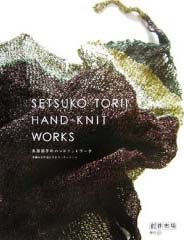
Setsuko Torii Hand Knit Works

143 pages - 2006/09

ISBN-10: 4895113825

more - Avril Site - From Habu with Translation Coming Soon

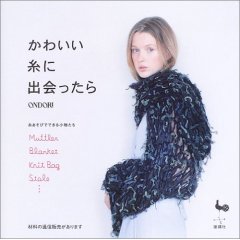
Rendezvous with Lovely Yarn Delicate little projects

Avril Yarn Shop

84 pages - 2005/11

ISBN-10: 4277430686

More - Avril Site

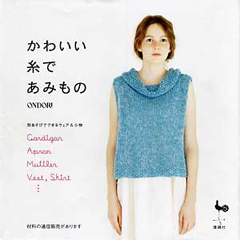
Loosely Translated - Seeing Lovely Threads To Wear
& Playing with shapes to make small articles

Avril Yarn Shop

87 pages - 2007/02

ISBN-10: 4277172091

Avril Site

(If anyone has a better translation, please let me know. The vocabulary was
really hard for me in this title)


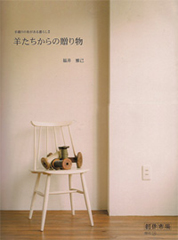
Gifts from the Sheep - Handweaving

Avril Yarn Shop

143 page - 2005/10

ISBN-10: 4895113728

Avril Site

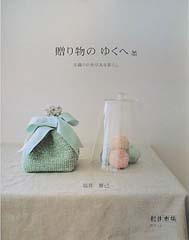
Gifts to Give - Handweaving

Avril Yarn Shop

143 pages - 2004/11

ISBN-10: 4895113582

Avril Site

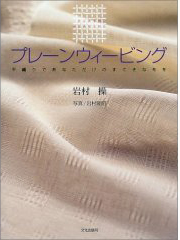
Plain Weaving

by Misao Iwamura

Bunka Publishing 2002

From Habu with Translation